 95 Nav Jiyoti Colony,Uttar Pradesh, Hapur
 Mon-Sat 9:00 Am – 6:00 Pm
 sanjubaba001972@gmail.com
 91+7653755669
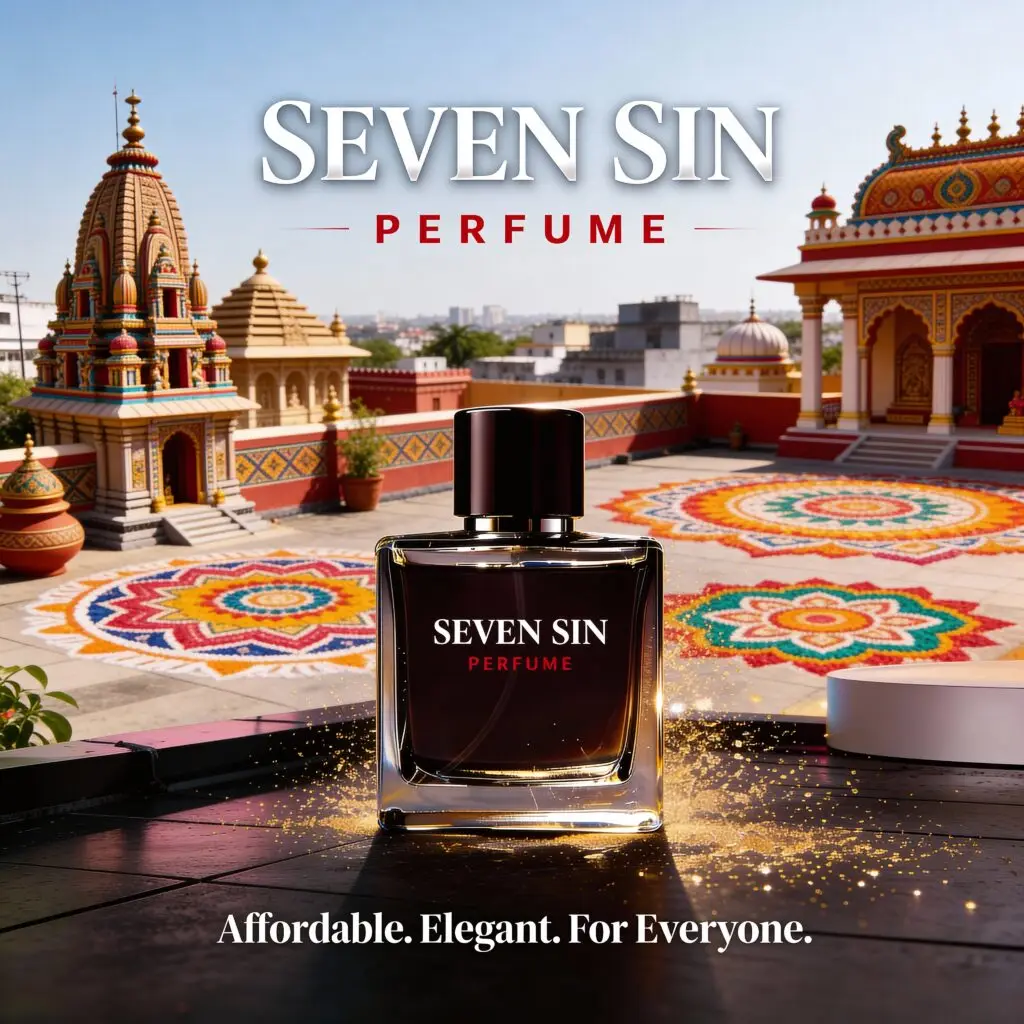
In a market saturated with either overpriced luxury fragrances or low-quality mass alternatives, a new category has quietly emerged—brands that deliver premium olfactory experiences without alienating the price-sensitive Indian consumer. Perfume brand Seven Sin positions itself precisely in this gap, blending traditional Indian fragrance sensibilities with modern perfumery standards while maintaining affordability. This is not merely branding—it reflects a calculated understanding of India’s evolving consumer psychology.
The Strategic Positioning of Perfume Seven Sin
Attar culture, regional scent preferences, and climatic conditions have historically influenced perfume consumption in India. Western luxury perfumes often fail to align with these nuances—either being too subtle for Indian weather or too expensive for daily use.
Perfume Seven Sin capitalizes on three structural gaps:
- Affordability without dilution of quality
- Cultural resonance with Indian fragrance DNA
- Accessibility across demographics—not just elite buyers
This is what defines it as an affordable premium brand rather than a budget compromise.
Why “Affordable Premium perfume brand” Works in India
The Indian consumer has evolved beyond basic price sensitivity. Today’s students, professionals, and business owners seek value density—maximum perceived quality per rupee spent.
Perfume Seven Sin leverages this by:
- Using long-lasting oil concentrations suited for humid climates
- Designing scents that are noticeable but not overpowering
- Offering premium packaging aesthetics without luxury-level pricing
This approach aligns with what economists call aspirational consumption behavior—where buyers want to feel premium without overspending.
Deep Fragrance Philosophy: Traditional Meets Contemporary
Unlike generic perfume brands that replicate Western notes, Perfume brand Seven Sin integrates traditional Indian scent structures into modern blends.
Key fragrance inspirations include:
- Oudh (Agarwood): Deep, woody, and culturally rooted
- Sandalwood: A staple of Indian spirituality and calmness
- Musk & Amber: Warm notes suited for evening wear
- Floral accords like Rose and Jasmine: Widely accepted across genders in India
But the innovation lies in balancing these notes with global compositions, making them suitable for:
- Office environments
- Social gatherings
- Daily wear without fatigue
Target Audience Breakdown (Behavioral Analysis)
Perfume Seven Sin does not target a single demographic—it targets behavioral clusters.
1. Students
- Looking for identity and social presence
- Budget constraints but high experimentation
- Preference for bold, noticeable fragrances
2. Working Professionals
- Require subtle yet long-lasting scents
- Prioritize professionalism over loudness
- Value consistency in performance
3. Entrepreneurs & Business Owners
- Personal branding is critical
- Fragrance acts as a psychological extension of presence
- Preference for unique, signature scents
4. Family-Oriented Consumers
- Seek reliability and value
- Prefer universally acceptable fragrances
- Avoid extreme or polarizing scent profiles
5. Industry Leaders
- Interested in differentiation
- Often adopt niche or uncommon scent profiles
- Appreciate storytelling behind fragrances
Product Design and Psychological Impact
Perfume is not just a cosmetic—it’s a cognitive trigger.
Perfume Seven Sin appears to understand this by focusing on:
- Longevity: Ensures memory retention in social interactions
- Projection: Balanced sillage that creates presence without intrusion
- Layering potential: Allows users to customize scent intensity
From a psychological standpoint, fragrance influences:
- First impressions
- Confidence levels
- Recall value in professional and social contexts
This is particularly important for entrepreneurs and professionals where subtle cues impact perception.
Competitive Advantage Over Traditional perfume Brands
Let’s break down how Perfume Seven Sin differentiates itself:
- Compared to luxury brands:
- Offers similar scent depth at a fraction of the cost
- More suited to Indian climate conditions
- Compared to local budget brands:
- Superior ingredient blending
- Better longevity and projection
- Compared to international mid-range brands:
- Stronger cultural alignment
- Higher value-per-price ratio
This creates a hybrid positioning that is difficult to replicate without deep market understanding.
SEO Insight: Why This Brand Gains Search Momentum
From a digital marketing standpoint, the keyword
“Perfume Seven Sin Indian Traditional Affordable Premium Brand”
has strong potential because it combines:
- Product category (Perfume)
- Brand identity (Seven Sin)
- Cultural positioning (Indian Traditional)
- Value proposition (Affordable Premium perfume brand)
This layered keyword structure improves:
- Search relevance
- User intent matching
- Conversion probability
Use Cases Across Lifestyles
Perfume brand Seven Sin is not positioned as a “special occasion only” product. Instead, it adapts across daily scenarios:
- Office Use: Light woody or musky notes
- Casual Outings: Fresh or citrus blends
- Evening Events: Oudh, amber-heavy compositions
- Festive Occasions: Floral and spicy notes
This versatility increases repeat usage—critical for brand retention.
Market Timing: Why Now?
India’s fragrance market is undergoing a structural shift:
- Increased disposable income among youth
- Exposure to global grooming standards
- Rise of D2C (Direct-to-Consumer) brands
Perfume Seven Sin enters at a point where:
- Consumers are ready for premium perfume brand experiences
- But are not willing to overpay for brand names alone
This timing is not accidental—it reflects strategic entry into a maturing market.
Final Assessment
Perfume Seven Sin is not revolutionary in terms of perfumery science—but its strength lies in market alignment. It understands:
- Indian climatic realities
- Cultural fragrance preferences
- Economic constraints
- Aspirational psychology
That combination is rare.
For students, it offers identity.
For professionals, it offers subtle authority.
For entrepreneurs, it offers memorability.
For families, it offers reliability.
For industry players, it offers differentiation.
In analytical terms, Perfume Seven Sin represents a well-calibrated brand architecture—balancing tradition, affordability, and premium perception without collapsing under any one dimension.
The real test, however, will be consistency. In fragrance markets, one weak batch can erode trust quickly. If the brand maintains formulation stability and expands intelligently, it has the potential to transition from a niche player to a recognized category leader in India’s affordable premium segment.
That outcome is not guaranteed—but structurally, the foundation is sound.